Fashion & Style
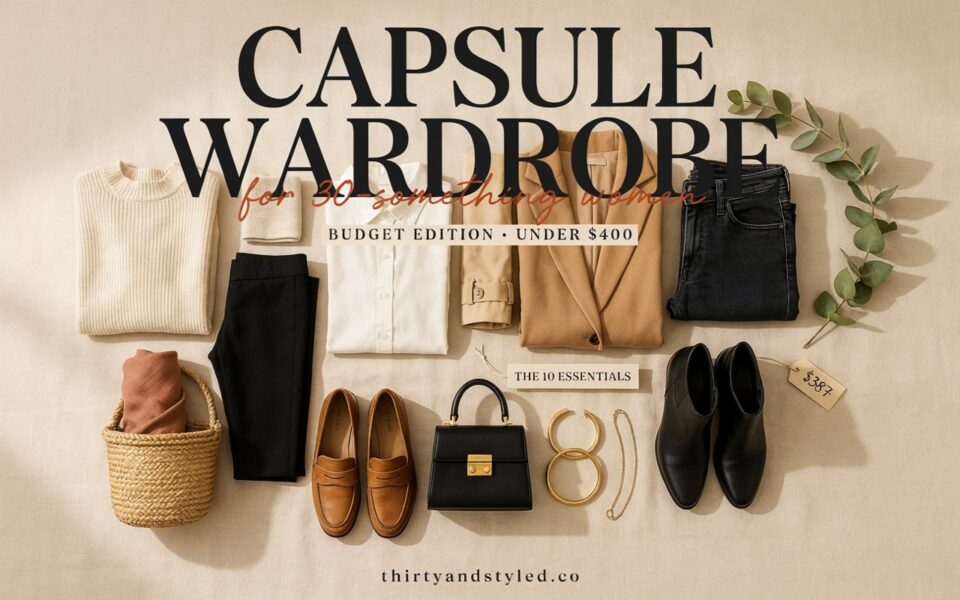
Capsule Wardrobe For 30 Something Women Budget: The Practical Guide

Why Your Closet Feels Full but You Still Have Nothing to Wear
You’re in your 30s. Your life is busier, your taste is clearer, and your budget has real limits. You open the closet and see plenty of clothes — yet getting dressed still feels harder than it should. Outfits take too long. Pieces don’t work together. Trends you bought two years ago already feel off.
A capsule wardrobe for 30-something women on a budget is not about owning almost nothing or dressing in only beige. It is about building a smaller, harder-working collection of clothes that fit your actual life, body, climate, and spending comfort. Done well, it reduces decision fatigue, lowers cost-per-wear, and makes getting dressed feel simpler without sacrificing personal style.
This guide walks through how to create a realistic budget capsule wardrobe in your 30s — what to keep, what to buy, how much to spend, and how to avoid the most common mistakes.
Background: What a Capsule Wardrobe Really Means in Your 30s
Capsule Wardrobe For 30 Something Women Budget: The classic capsule idea is a limited set of interchangeable pieces for a season. For women in their 30s, the concept needs updating. Careers, parenting, shifting bodies, varied social settings, and budget realities all matter.
A modern budget capsule is less about a strict number of items and more about:
- High mix-and-match potential
- Comfort for long days
- Pieces that work across work, weekend, and casual outings
- Quality within a realistic price range
- Flexibility as your body or lifestyle changes
In your 30s, the goal is usually not minimalism for its own sake. It is clarity and efficiency. You want fewer “what was I thinking?” purchases and more outfits that feel like you.
Core Principles of a Budget Capsule for Your 30s
1. Start with what you already own Most people can build 60–80% of a working capsule from clothes already in the closet. Shopping first is the most expensive approach.
2. Define your real life, not an idealized one List the settings you actually dress for: work (office, hybrid, remote), school drop-off, errands, casual dinners, weekends, travel. Design for those first.
3. Choose a flexible color strategy A simple base of neutrals (black, navy, gray, beige, white, denim) plus 2–3 accent colors you love makes mixing easy without looking uniform.
4. Prioritize cost-per-wear over sticker price A $60 pair of trousers worn 40 times costs less per wear than a $25 pair worn twice.
5. Fit beats trend In your 30s, clothes that fit your current body and lifestyle outperform trendy pieces that only work in theory.
Building the Capsule: Category-by-Category Guide
Tops
Aim for versatile necklines and fabrics that layer.
- 2–3 good basic tees or shells
- 1–2 button-downs or tailored shirts
- 1–2 knit tops that can go casual or polished
- 1 lightweight sweater or cardigan
Budget tip: Look for cotton, cotton blends, and simple synthetics that wash well. Avoid delicate fabrics if you need low-maintenance clothes.
Bottoms
- 1–2 pairs of well-fitting jeans (medium or dark wash is most versatile)
- 1 pair of tailored trousers or pull-on work pants
- 1 versatile skirt or additional pant if your lifestyle needs it
Fit is everything here. Budget brands with good reviews on fit can outperform more expensive pieces that need constant altering.
Dresses and One-Piece Options
- 1–2 simple dresses that work with sneakers or sandals and can be layered
A good dress reduces decision-making on busy days.
Outer Layers
- 1 denim or utility jacket
- 1 blazer or structured jacket if your work life needs it
- 1 warmer coat appropriate for your climate
Outerwear often gives the highest visual return on a budget when chosen carefully.
Shoes
- Comfortable white or neutral sneakers
- Simple flats or loafers
- One slightly dressier option (ankle boot or mid heel) depending on climate and needs
Shoes can quietly consume a budget. Prioritize comfort and versatility.
Accessories
Capsule Wardrobe For 30 Something Women Budget: Keep these minimal at first: a everyday bag, simple belt, and a couple of pieces of jewelry you already wear. Accessories are easy places to overspend.
Sample Budget Capsule Framework (Approximately 25–35 Pieces)
This is a flexible target, not a rigid rule:
- 8–10 tops
- 4–6 bottoms
- 1–2 dresses
- 2–3 outer layers
- 3–4 pairs of shoes
- A few core accessories
Many women find that once the core is working, seasonal additions stay small and intentional.
Budget Strategy: How to Spend Smart in the USA
1st Phase: Audit (Free) Pull everything out. Keep what fits, flatters, and works with at least two other items. Set aside the rest.
2nd Phase: Identify gaps List only the missing workhorses (e.g., “black tailored pants,” “white crew tee,” “comfortable loafers”).
3rd Phase: Shop in this order
- What you already own and can alter
- Secondhand / consignment / resale apps
- Sales at reliable mid-price retailers
- Full-price only for critical fit items you cannot find elsewhere
4th Phase: Set a realistic total budget Many women successfully refresh a capsule for $150–400 by focusing on gaps rather than a full replacement. Others invest more in one or two high-cost-per-wear categories (shoes, coat, trousers). Choose what matches your finances.
Where budget shoppers often do well
- Basics: tees, tanks, simple knits
- Denim: mid-range or sale finds with good reviews
- Secondhand blazers and coats
- Simple sneakers and flats on sale
Where to be more careful
- Pants that must fit perfectly
- Shoes you will wear daily
- Anything that needs dry cleaning if you want low maintenance
Practical Step-by-Step Plan
- Define your dress code reality for one typical week.
- Do a full closet audit and create three piles: keep, maybe, out.
- Photograph or list your keepers so you can see combinations.
- Write a short gap list (maximum 8 items).
- Shop your closet first — restyle before you buy.
- Fill gaps gradually over 4–8 weeks instead of one big haul.
- Test outfits in real life and adjust.
- Reassess each season with small additions only.
Common Mistakes and Solutions
1st Mistake: Buying a “capsule” of new clothes all at once Solution: Build from what you own. New purchases should fill proven gaps.
2nd Mistake: Copying someone else’s exact color palette Solution: Use neutrals as a base, then add colors you already wear and like.
3rd Mistake: Ignoring comfort and lifestyle Solution: If you walk a lot, chase kids, or sit at a desk all day, design for that reality.
4th Mistake: Chasing trends inside a capsule Solution: Keep trend items minimal and treat them as short-term extras, not core pieces.
5th Mistake: Assuming expensive equals better Solution: Judge by fit, fabric, and cost-per-wear. Many budget and mid-range pieces perform excellently.
6th Mistake: Making the capsule too small too fast Solution: Start with a workable number. You can refine downward later.
Pros, Cons, and Balanced Analysis
Advantages of a budget capsule in your 30s
- Faster morning decisions
- Lower ongoing clothing spend
- Better cost-per-wear
- Clearer personal style
- Less guilt about unused clothes
- Easier packing and travel
Challenges
- Requires an honest audit and some upfront time
- Can feel restrictive if made too rigid
- Body or job changes may require adjustments
- Budget limits mean more patience while hunting for the right pieces
Balanced view A capsule wardrobe is a tool, not a personality test. For most 30-something women, a flexible, budget-aware version reduces stress and spending without demanding perfection. The win is a closet that supports your life instead of competing with it.
Visit Blush magazine
Future Trends (2026 and Beyond)
Several shifts are shaping how women in their 30s approach capsules:
- Greater focus on comfort and mobility without looking sloppy
- Continued growth of resale and secondhand as normal, not alternative
- Preference for washable, low-maintenance fabrics
- Less interest in extreme minimalism and more interest in “enough”
- Hybrid work wardrobes that move between home, office, and casual settings
- Quiet preference for quality basics over logo-driven trend pieces
The most sustainable budget approach remains the same: buy less, choose better, wear more.
Conclusion and Key Takeaways
A capsule wardrobe for 30-something women on a budget works best when it is realistic, flexible, and built around your actual life. Start with your closet, define your real dress codes, choose mixable colors, and fill only the gaps that matter. Prioritize fit and cost-per-wear over volume or trendiness.
You do not need a perfect Instagram capsule. You need a smaller set of clothes that make weekday mornings easier and spending more intentional.
Key Takeaways:
- Build from clothes you already own before shopping
- Design for your real weekly schedule, not an idealized one
- Use neutrals plus a few favorite accents for easy mixing
- Judge purchases by cost-per-wear and fit
- Keep the capsule flexible — numbers are guidelines, not rules
- Shop secondhand and sales strategically for budget success
- Reassess seasonally with small, intentional additions
Quick Summary A budget-friendly capsule wardrobe for women in their 30s focuses on versatile, comfortable pieces that work across real life. Audit first, buy second, prioritize fit and cost-per-wear, and keep the system flexible enough to grow with you.
Short Content Disclaimer This article is for general informational purposes only. Clothing needs, budgets, body types, and climates vary. Adjust recommendations to your personal situation. This content is not affiliated with any retailer or brand.
Authority / further reading suggestions: Practical wardrobe strategies align with long-standing principles from sustainable fashion advocates and consumer education resources on cost-per-wear and intentional shopping. For personal budgeting guidance, established consumer finance resources can help align clothing spend with overall financial goals.



Ice Water Face Dip Benefits for Morning Puffiness: The Ultimate Cryo-Skincare Guide

Capsule Wardrobe For 30 Something Women Budget: The Practical Guide

Cream vs Powder Blush for Textured Skin: Which Looks Better and Lasts Longer?
-
Blog9 years ago
These ’90s fashion trends are making a comeback in 2017
-
Blog9 years ago
The final 6 ‘Game of Thrones’ episodes might feel like a full season
-
Blog9 years ago
According to Dior Couture, this taboo fashion accessory is back
-
Blog9 years ago
The old and New Edition cast comes together to perform
-
Blog9 years ago
Phillies’ Aaron Altherr makes mind-boggling barehanded play
-
Blog9 years ago
Uber and Lyft are finally available in all of New York State
-
Blog9 years ago
Mod turns ‘Counter-Strike’ into a ‘Tekken’ clone with fighting chickens
-
Blog9 years ago
Disney’s live-action Aladdin finally finds its stars